
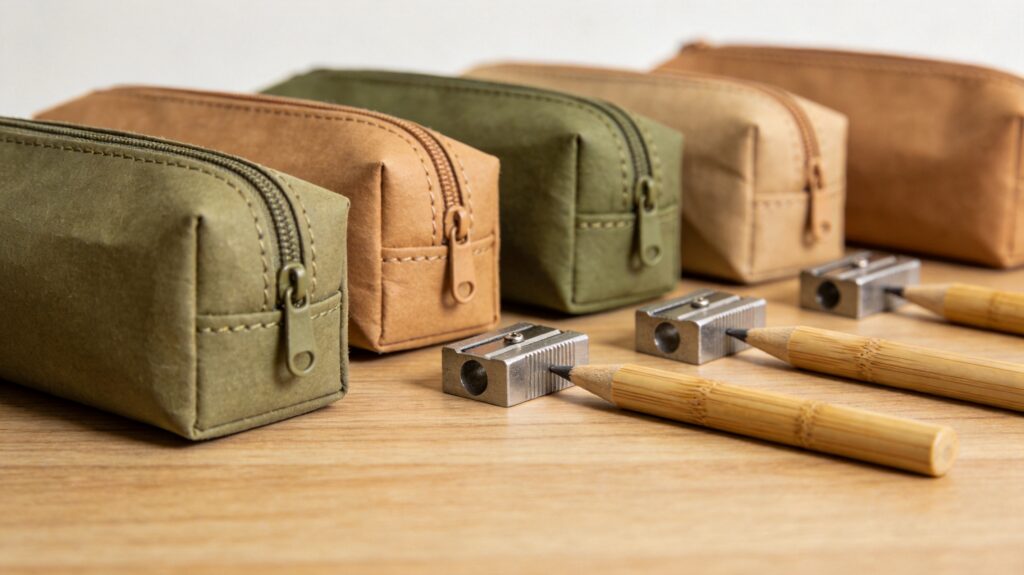
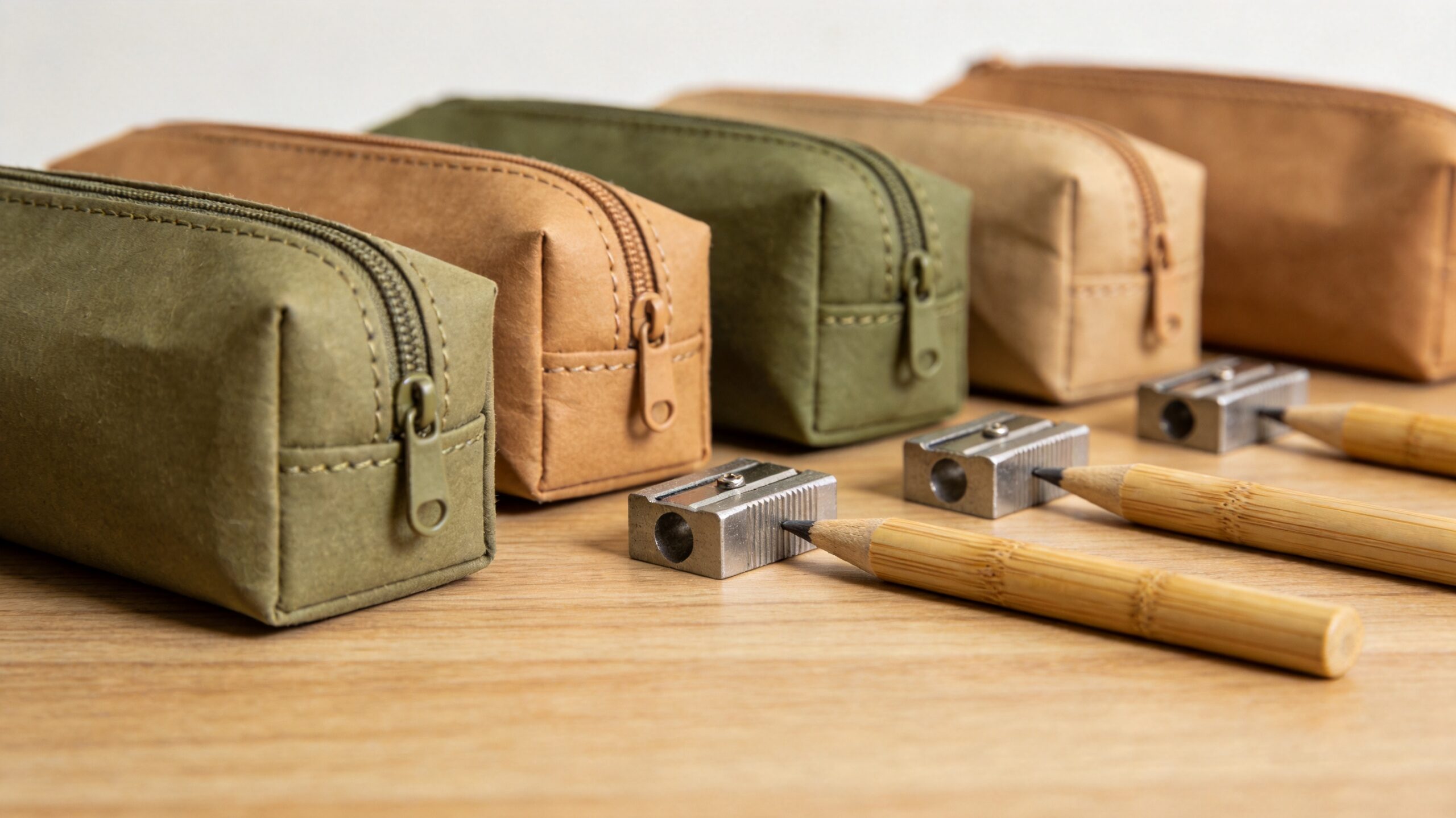
How to Choose Eco-Friendly Bulk Pencil Cases and Sharpeners for School and Office Supply Chains
Sustainability is no longer a niche preference in the B2B stationery market—it is a procurement standard. School districts, corporate facilities managers, and office supply distributors are under increasing pressure to reduce their environmental footprint while maintaining product quality and cost efficiency. When it comes to everyday essentials like the humble pencil case and the indispensable pencil sharpener, the shift to eco-friendly alternatives represents a meaningful, visible commitment to green practices. This guide provides supply chain professionals with a practical framework for selecting sustainable bulk stationery that meets performance, safety, and budgetary requirements.
1. Why Eco-Friendly Bulk Pencil Cases and Sharpeners Matter for B2B Buyers
The Shift Toward Sustainable Procurement in Education and Corporate Offices
Institutional buyers are no longer evaluating stationery solely on price and durability. School districts face mandates from local governments to achieve carbon neutrality, while corporations are aligning their purchasing policies with ESG (Environmental, Social, and Governance) targets. A bulk order of 10,000 conventional plastic pencil cases contributes significantly to landfill waste; the equivalent order in recycled materials directly supports circular economy goals. Furthermore, end-users—students, teachers, and employees—increasingly expect their institutions to model responsible consumption. Choosing sustainable pencil cases and sharpeners is a low-risk, high-visibility action that demonstrates environmental leadership without disrupting daily operations.
Key Environmental Certifications to Look For in Pencil Case and Pencil Sharpener Suppliers
To avoid greenwashing, B2B buyers must verify third-party certifications. Look for suppliers who hold Global Recycled Standard (GRS) certification for recycled content, Forest Stewardship Council (FSC) certification for paper-based or wood-based components, and Cradle to Cradle certification for material health and recyclability. For plastic components, check for BPA-free and phthalate-free declarations. Additionally, ISO 14001 certification indicates that the manufacturer operates an effective environmental management system. These certifications provide verifiable assurance that your bulk pencil case and pencil sharpener orders meet genuine sustainability criteria. For a comprehensive overview of our sustainable product range, visit our products page.
2. Material Specifications: What Defines an Eco-Friendly Pencil Case
Recycled PET, Organic Cotton, and Biodegradable Options
The material composition of a pencil case determines its environmental impact. Recycled PET (rPET), derived from post-consumer plastic bottles, is a popular choice for its durability and water resistance. Organic cotton canvas offers a natural, biodegradable alternative with a soft-touch aesthetic, ideal for premium retail packaging. For maximum compostability, consider cases made from PLA (polylactic acid) derived from corn starch, though these require industrial composting facilities. When sourcing, request material data sheets that specify the percentage of recycled or bio-based content. Avoid PVC and other halogenated plastics, which release toxic compounds during production and disposal.
Durability and Safety Standards for High-Volume School and Office Use
Eco-friendly does not mean fragile. A sustainable pencil case must withstand daily zipping, dropping, and overstuffing. Specify reinforced seams, heavy-duty zippers, and tear-resistant fabrics. For safety, particularly in K-12 environments, ensure materials meet ASTM F963 and EN 71 standards for toy safety, which cover lead content, sharp edges, and small parts. Also, verify that dyes and printing inks are non-toxic and water-based. A durable case reduces replacement frequency, which is itself a sustainability win—fewer units purchased over time means less overall resource consumption.
3. Choosing a Sustainable Pencil Sharpener: Manual vs. Electric
Low-Energy and Zero-Waste Manual Sharpeners for Classrooms
Manual sharpeners are inherently more sustainable than their electric counterparts because they require no energy input and generate no electronic waste. For classroom settings, choose sharpeners with a high-capacity shavings receptacle to minimize mess and allow for composting of wood shavings. Look for models with replaceable blades made from hardened steel, extending the product’s lifespan. Some manufacturers now offer sharpeners with bodies made from recycled ABS plastic or FSC-certified wood. These units are cost-effective, quiet, and safe for young students.
Recyclable and Repairable Electric Sharpeners for Office Environments
In high-volume office settings, electric sharpeners offer speed and consistency. However, they introduce concerns about energy consumption and end-of-life disposal. To mitigate this, select models that are Energy Star rated and constructed with modular components that can be repaired rather than replaced. The housing should be made from recyclable ABS plastic, and the motor should be designed for a minimum 10-year lifespan. Check whether the manufacturer offers a take-back program for worn-out units, ensuring that the electronic components are properly recycled. A repairable electric sharpener, despite a higher upfront cost, avoids the environmental burden of frequent replacements.
4. Matching Product Specs to Use Cases: Classrooms, Offices, and Remote Kits
Bulk Pencil Cases for Student Distribution and Retail Packaging
When procuring pencil cases for student distribution, prioritize volume and cost-efficiency. A simple, unbranded or lightly branded rPET case with a three-ring binder punch is a practical choice for school supply lists. For retail packaging, consider cases with clear windows (made from recycled PET film) to display contents, and use soy-based inks for printing. If the cases are part of a “back-to-school” kit, ensure they are sized to fit standard pencils, erasers, and a small ruler. For corporate remote work kits, a premium organic cotton case with a minimalist design reinforces a company’s sustainability brand. Our eco-friendly colored pencils pair well with these sustainable cases for a complete green solution.
Desk-Mounted Sharpeners vs. Portable Models for Corporate Supply Rooms
For corporate supply rooms, a desk-mounted manual sharpener with a clamp base is a durable, theft-resistant option that requires no power. For executive offices or meeting rooms, a sleek, low-noise electric sharpener with an auto-stop feature is appropriate. In shared workspaces, portable sharpeners with integrated shavings catchers are practical for employees who move between desks. When selecting, consider the pencil diameter (standard vs. jumbo) and the frequency of use. Matching the sharpener type to the specific workflow prevents over-specification and reduces unnecessary cost and waste.
5. Cost-Benefit Analysis: Balancing Eco-Friendly Materials with Bulk Pricing
Price Per Unit Comparisons Across Sustainable Pencil Case and Sharpener Lines
Sustainable materials often carry a premium of 10–20% compared to virgin plastics. However, bulk purchasing mitigates this gap. For example, a standard PVC pencil case may cost $0.80 per unit, while an rPET equivalent costs $0.95 per unit at a 5,000-unit order. At 20,000 units, the price difference narrows to $0.10. Similarly, a manual sharpener with a recycled ABS body is only marginally more expensive than a virgin plastic version. Request tiered pricing from suppliers and compare total landed costs, including shipping and customs, to make an accurate assessment.
Long-Term Savings from Reduced Replacement Rates and Brand Alignment
The true cost of a pencil case or sharpener includes its replacement frequency. A low-quality virgin plastic case may fail within six months, while a reinforced rPET case lasts two years. Over a five-year horizon, the sustainable option is cheaper per month of use. Additionally, aligning your brand with sustainability can drive indirect savings: schools may qualify for green grants, and corporations may attract eco-conscious clients. These intangible benefits often outweigh the modest upfront premium, making eco-friendly bulk stationery a financially sound investment. For further industry reference on material performance, consult authoritative sources.
6. Sourcing and Supplier Vetting for Bulk Stationery Orders
Verifying Green Claims: Certifications, Audits, and Sample Testing
Before committing to a supplier, conduct a thorough vetting process. Request copies of all relevant certifications and verify them with the issuing bodies. If possible, conduct a factory audit to confirm that recycled materials are genuinely used and that labor practices are ethical. Always order pre-production samples and test them for durability, safety, and functionality. For sharpeners, test blade sharpness over 100 uses; for cases, test zipper strength and seam integrity. Do not rely solely on marketing materials—insist on documented evidence. Learn more about our manufacturing standards on our about page.
Minimum Order Quantities, Lead Times, and Custom Branding Options
Sustainable suppliers may have higher minimum order quantities (MOQs) due to the specialized nature of recycled materials. Clarify MOQs early in the negotiation. Also, inquire about lead times, which can be longer for custom eco-friendly production runs. For branding, confirm that your logo can be applied using water-based or soy-based inks, and that any embroidery uses recycled threads. Some suppliers offer low-MOI (minimum order increment) options for reorders, which is beneficial for managing seasonal demand without overstocking.
7. Implementation and Logistics for Supply Chain Managers
Consolidating Pencil Case and Sharpener Orders to Reduce Shipping Footprint
To minimize the carbon footprint of transportation, consolidate your pencil case and pencil sharpener orders into a single shipment. Work with suppliers who can co-pack different items into one master carton. Optimize packaging density by choosing flat-pack cases and compact sharpeners. If possible, select sea freight over air freight for non-urgent orders, and use suppliers located closer to your distribution centers to reduce last-mile emissions.
Managing Inventory and Reordering Cycles for Seasonal Demand
School and office supply demand is highly seasonal, peaking in late summer and early January. Use historical sales data to forecast demand and place orders 4–6 months in advance to secure favorable pricing and avoid rush shipping. Implement a reorder point system that triggers new orders when inventory falls below a pre-set threshold. For sustainable products, consider a “just-in-case” buffer stock to account for longer lead times from eco-certified suppliers. Regularly review your inventory turnover to avoid obsolescence, particularly for branded items.
8. Frequently Asked Questions on Eco-Friendly Bulk Stationery
Are Recycled Pencil Cases as Durable as Virgin Plastic Versions?
Yes, when manufactured correctly. High-quality rPET and recycled polypropylene have comparable tensile strength and flexibility to virgin plastics. The key is the quality of the recycling process and the addition of reinforcing agents. Always request test data from the supplier. In practice, a well-made recycled pencil case will outlast a cheap virgin plastic case due to better construction standards. For a technical reference on recycled polymer properties, consult scientific literature.
How Do I Dispose of or Recycle Worn-Out Sharpeners and Cases?
For pencil cases, if they are made from a single material (e.g., 100% rPET), they can be placed in standard plastic recycling streams. If they contain metal zippers, separate the metal components or check if your local facility accepts mixed materials. For sharpeners, manual models with steel blades can be disassembled—the metal goes to scrap, and the plastic body to recycling. Electric sharpeners should be sent to an e-waste recycling facility. Many suppliers now offer take-back programs; inquire about this when placing your order. For more guidance, check our FAQs page.
—
Choosing eco-friendly bulk pencil cases and sharpeners is a strategic decision that balances environmental responsibility with operational efficiency. By focusing on certified materials, appropriate product specifications, and rigorous supplier vetting, B2B buyers can secure sustainable stationery that performs well, lasts long, and reinforces their organization’s commitment to a greener future. The upfront effort in research and negotiation pays dividends in reduced environmental impact, enhanced brand reputation, and long-term cost savings.